Followers

Thursday, November 25, 2021

Thanksgiving Traditions


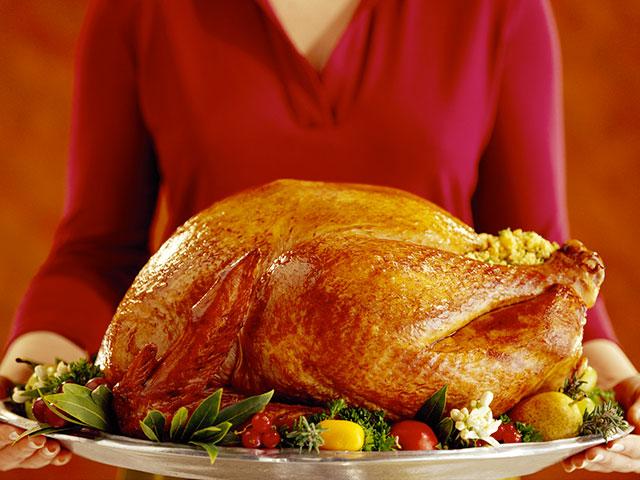
thanksgiving-turkey


What do you think of when you think of Thanksgiving? A table laden with turkey, dressing, and pumpkin pie? A break from work or school? Family gathered from far and near? Football? Sales the day after?

Many traditions make Thanksgiving special and memorable. However, we might also think of our history. In 1621, Governor Bradford declared a day to offer thanks for good crops and invited an Indian tribe to join the settlers for a three-day feast and games.

The second recorded American Thanksgiving, in 1623, actually began as a time of prayer and fasting. The settlers set aside a day to pray and fast because they desperately needed rain. While they were praying, a gentle rain began to fall. Prayer time turned into an impromptu time of giving thanks. (Do you know of anyone who thinks of prayer and fasting in connection with Thanksgiving? After all, it is part of our history of the holiday.)

Although various colonies celebrated harvest festivals, it was not until 1777 that all 13 colonies celebrated at the same time. In 1789, George Washington was the first president to declare a Day of Thanksgiving. However, it did not continue to be an annual celebration.

Finally, in 1863 Abraham Lincoln gave a proclamation, declaring a Day of Thanksgiving. He thought it might help to unite a divided nation. Since then, Thanksgiving has been proclaimed a holiday by every president. (Did anyone think of bringing unity in connection with Thanksgiving?)

About a month ago, I read a couple of articles that got me to thinking about this particular holiday. They were both about depression. Yes, depression—as unlikely as that seems.

One article suggested that one way to combat depression is to write in a notebook every morning, listing five things you’re grateful for—just five things, every morning. Evidently, practicing gratefulness helps change the mindset from a disheartened viewpoint to having a positive, hopeful outlook on life.

Another article suggested that throughout the day, if you feel down, to stop and think of three things that you are grateful for. It’s difficult to stay down or depressed while feeling grateful. As you focus on the positive—the things you’re thankful for—it drives out the doldrums.

I often get so busy just keeping up with life that I forget to be grateful. After reading those articles, I decided it was a good thing that we celebrate Thanksgiving so we will be reminded to be grateful.

But then I wondered if we get so busy with our traditions that we sometimes forget to give thanks on Thanksgiving. When I asked what you think of when you think of Thanksgiving, did anyone even think of giving thanks?

No other holiday spells out what it is all about—“Thanks-giving”—but we hear it as a noun, a name, a holiday—not an action. What would happen if we responded to the verb in the holiday? What if we celebrated by giving thanks?

Even in the worst circumstances, there are things to be grateful for. When we take our eyes off the problems and focus on the positive, it lifts our spirits and makes the difficulty easier to bear. When we go a step further and voice appreciation to those around us for blessing us, it encourages them and makes their lives easier—and brighter.

I’ve even seen relationships restored when words of appreciation were spoken. I don’t know whether the holiday brought unity between the North and South in Lincoln’s day, but gratefulness can bring unity between individuals, in families, and in groups—wherever people interact.

When I think of Thanksgiving, I first think of family because that is when we have our family reunion. And I’m all for turkey, dressing, gravy, pies, and all the bounty. Parades, football, and slashed store prices add to the fun. I love celebrating Thanksgiving.

However, except for fond memories and extra pounds, those things are soon past. Conversely, if we celebrate Thanksgiving with an attitude of gratitude, it could make a positive difference that would have lasting effect—in lives of others as well as ourselves. In George Washington’s words, Thanksgiving was to be “a day of public thanksgiving and prayer, to be observed by acknowledging with grateful hearts the many and signal favors of Almighty God.” What would it take to keep that tradition alive?

May you and those you love be blessed as you celebrate Thanks-giving this year!

Wednesday, November 24, 2021

Cultivating a Spirit of Thankfulness


thank-you-squirrel_SI.jpg


“Where are the other nine?” (Luke 17:17b)

Even though we may stuff ourselves at the dinner table, celebrating Thanksgiving can actually make us healthier judging by recent research. Studies have shown that being thankful improves our physical and emotional health. Holding on to feelings of thankfulness boosts our immune system and increases blood supply to our heart. Daily guided exercises or the habit of keeping a weekly gratitude journal can increase our alertness, enthusiasm, and energy, and improve our sleep. People who describe themselves as feeling grateful tend to suffer less stress and depression than the rest of the population.

For all its benefits, gratitude doesn’t come naturally to us. As Jesus passed through a village one day, he was spotted by ten lepers who desperately longed to be healed (Luke 17:11-19). They kept themselves at a distance as required by law but cried out to him, “Jesus, Master, have pity on us!” Instead of instantly healing the men, Jesus told them to go and show themselves to the priest. As the ten lepers walked off to obey, their skin disease disappeared.

One of the men turned around, shouting praises to God as he came back to Jesus. He threw himself at his benefactor’s feet. Jesus expressed amazement that only one man had thought to thank him. “Were not all ten cleansed?” he asked. “Where are the other nine?” He also pointed out that the only man who did respond was a Samaritan, a race despised by the Jewish people.

For Christians, cultivating a spirit of thankfulness is more than a good idea; it’s a direct command from God. In the Old Testament, God laid down specific guidelines for the Israelites to bring thank offerings. In the New Testament, believers are instructed to be thankful in all circumstances (1 Thessalonians 5:18). When we’re struggling with trials and difficulties, this sounds like a strange command, especially since we live in a culture that encourages us to act on the basis of how we feel. But God knows that when we focus on our blessings, it’s easier to keep our problems and concerns in the right perspective.

King David never lost his keen awareness of all that God had done for the nation of Israel and for him personally. Even though he experienced disappointment, pain, and heartache, David often poured out his feelings of thankfulness to his Creator and Lord. That gratitude became the foundation of his worship of God.

Cultivating a spirit of thankfulness honors God and strengthens our faith. It also strengthens our relationships with other people. We can’t be in a right relationship with God or with anyone without a spirit of thankfulness. No matter what problems we’re struggling with, we don’t want to be like the nine former lepers who forgot to say “thank you” to their Healer.

I will give thanks to you with all my heart, O Lord my God. I will honor you forever because your mercy toward me is great. Psalm 86:12-13 (God’s Word translation)

Ask yourself: How often do I express gratitude to God or to other people?

Tuesday, November 23, 2021

Are You Thankful For Your Riches?


mother-daughter-turkey_si.jpg


Sometimes, I annoy myself.

In fact, often times I annoy myself.

I’m a whiner. Sometimes to my husband, mostly to God.

Why don’t people like me? Don’t they appreciate my talent? Why does everyone else our age get to go on regular vacations, and we don’t?

The list is endless.

Makes me sick.

Lately, I have been doing a study titled, “The Battle Plan for Prayer.” The section covered last week was Locks and Keys of Prayer. Studying the Bible has been somewhat of a passion for me over the last few decades, so it didn’t surprise me when some of the locks were unconfessed sin, repeated words, and unforgiveness.

It was the third key that tripped me up — strive for contentment.

If you met me, you wouldn’t say I showed the signs of discontentment, that is why it was hard to diagnose — mostly because it generally doesn’t have to do with money.

But sometimes it does.

Mostly, I am discontent with my situation at any given time. Or can be. I complain to God about my husband and my husband about God. I murmur about my drive or car or job, when in truth I do not deserve any of those things, much less a caring husband who listens.

1 Timothy 6:6-10 says:

But godliness with contentment is great gain. For we brought nothing into the world, and we can take nothing out of it. But if we have food and clothing, we will be content with that. Those who want to get rich fall into temptation and a trap and into many foolish and harmful desires that plunge people into ruin and destruction. For the love of money is a root of all kinds of evil. Some people, eager for money, have wandered from the faith and pierced themselves with many griefs. (NIV)

So, I may not love money, but I am certainly not content with just food and clothing.

And yet, most of the world doesn’t have their basic needs met.

It’s like the illustration J.D. Greear gave when teaching on the book of Colossians. He talks about staying in a Holiday Inn Express for two nights. After the first night, you go down to the manager and say, “I think I’d like to add granite counters and expand the bathroom.” The manager would wonder why the big changes when you’re only staying one more night.

Those two nights are the time we spend on this planet.

During this Thanksgiving Season, I want to concentrate on today. Be content. Be truly grateful because we are rich. Look at this text found in 2 Corinthians 8:9,

“For you know the grace of our Lord Jesus Christ, that though he was rich, yet for your sake he became poor, so that you through his poverty might become rich.” (NIV)

I would just like to pray for us, friend.

Our Great God.

Thank you for sending your son so that through His poverty, we might become rich. Thank you for salvation, for the Holy Spirit who lives within us, for eternity with you. Help us to invest in heaven now. Forgive us for when we spend our time and energy on fluff. Expand our horizons out of our comfort zone to share and to pray. And during this Thanksgiving season, give us your grace to not only be content but eternally grateful.

In the name of our Lord and Savior, Jesus Christ.


Monday, November 22, 2021

Thankful for Painful Detours?


construction worker holding detour sign


Come now, you who say, “Today or tomorrow we will travel to such and such a city 
and spend a year there and do business and make a profit.” Yet you do not know what tomorrow will bring — what your life will be! (James 4:13-14 CSB)

My life had taken a painful detour and I kept asking dark what-if questions. What if my husband had not begun to struggle with anxiety, depression, and suicidal thoughts? What if he had not retired from pastoring? What if his medication stopped working and suicidal thoughts came back? What if I couldn’t take this anymore? What if I just quit? Stopping my dark what-if questions was impossible. I was stuck and needed help.

My friend Kelly was in training to become a life coach. She reached out asking if she could work with me and I agreed thinking I was helping her. God had a plan to use her to help me stop seeing my journey as a detour and stop asking my what-ifs questions.

A few sessions in, she asked me to identify my goals and dreams.

I quickly answered, “I want to figure out my new identity as a retired pastor’s wife who’s now living on the other side of a pew. My dream is to stop asking what-if questions and understand the detour my life has taken.”

She followed up by asking, “If you could change anything about your life today, what would it be?”

Without hesitating, I said, “My husband would never have suffered anxiety, depression, or suicidal thoughts. We would not have retired or gotten so far into debt because of the medical bills. I wouldn’t live with the fear that the suicidal thoughts would come back. I wouldn’t have lost my identity as a wife or a pastor’s wife.” I fired my answers off, one after another.

Her next question caught me off guard. “What do you love about your life today?”

As I thought about my answer. I knew I was in trouble. My response to the second question was going to change my answers to the first one. I started to list all of the things I loved about my life:

  • my church
  • circle of friends
  • the two life groups and Bible study I led each week
  •  my cute apartment
  • my garden full of flowers and fruit trees
  • the hummingbirds in my yard
  • living so close to my children and grandchildren

All these things were in my life because of my husband’s breakdown.

I couldn’t change my painful experiences without losing the things I had come to love. My focus shifted from the painful journey to all the beautiful things I now had in my life. My response helped me move from living in the what-ifs to becoming thankful for what I have. What-if living is a mindset of dwelling on the loss. Living with a focus on what I am thankful for means I am right where God wants me.

Instead, you should say, “If the Lord wills, we will live and do this or that.” (James 4:15 CSB)

As I read this verse, I hear God say, “Be thankful and live in this moment, for it is all You are guaranteed. Stop asking what-if and ask me for direction.

I had been sharing about my life taking a detour because of my husband’s struggles with anxiety, depression, and suicidal thoughts. Now I understood it wasn’t a detour at all. God knew this would happen and had a plan. He is using me in the middle of my mess. I am finding joy and serving Him in ways I never would have had the opportunity to otherwise. I am not missing out on life because of the struggles I’m facing; I am living a richer, fuller life because of them.

Sunday, November 21, 2021

When God Whispered


45 Bible verses about Fire

by Fred Alberti, crosswalk.com

All Scripture is God-breathed and is useful for teaching, rebuking, correcting and training in righteousness, so that the man of God may be thoroughly equipped for every good work. – 2 Timothy 3:16-17

My four-year-old son had to learn 2 Timothy 3:16 for AWANA. One of the leaders was concerned and stated that there was just no way the children could grasp the idea of Scripture being “God-breathed.” So we decided to ask my son to explain what “God-breathed” meant.

You know I think we are sometimes too quick to underestimate a child’s ability to understand the truths of the Bible. We are so quick to dismiss their abilities yet this is what Jesus had to say in Matthew 11:25, “At that time Jesus said, “I praise you, Father, Lord of heaven and earth, because you have hidden these things from the wise and learned, and revealed them to little children.”

Jesus knew what children could understand.

I recently was walking through a nature trail. The leaves rustled underfoot and the sun shone out over the lake next to the trail inviting me to stop and reflect on God’s glory. I found a bench and while I sat there I heard the breeze whispering through the tops of the trees. Just a slight hushed sound and my thoughts. That’s when I pondered on my son’s words.

What did my son say?

He said, “Well, God-breathed means that…” and here he lowered his voice, “God whispered it.”

Wow… God whispered His Word.

Peter said, “…you must understand that no prophecy of Scripture came about by the prophet’s own interpretation. For prophecy never had its origin in the will of man, but men spoke from God as they were carried along by the Holy Spirit” (2 Peter 1:20-21).

Our Bible isn’t just some compilation of stories. It is the very Word of God whispered into the hearts and minds of men who were selected to be his special vessels to communicate His good news.

How about you?

Have you, like Elijah, heard the “still small voice” of the Lord bringing you comfort, encouragement, and guidance?

If not, maybe you need to spend some time to just be still and maybe in His time you’ll hear His whisper in your heart too.

Saturday, November 20, 2021

Returning a Favor


family-grace-meal_SI.jpg


When I moved into my home in 1977, I salvaged an old table my father was discarding. Our family grew from four to seven around that table.

Then we shrank. When their father departed, we were six.

The years began to show on the table. One of its legs began to wobble. Without warning, it would collapse to the floor leaving all the work for the other three legs. We would laugh. But after a while, one of us found the falling leg not so funny.

When my youngest son was eight years old, he found a hammer and some very long nails and played carpenter. He reattached the errant piece, permanently joining it to the table. The repair was effective, but not pretty.

A few years later, I got a “new” dining room table—also recycled. This table was better. It expanded. And our family was expanding. I had remarried. Some of the children had grown and married and had children of their own.

So the table could be small for everyday dinners, and it could be large for family celebrations. Plus, it was reliable–for a time. Then one of its legs turned mutinous too.

This time, my husband Paul played carpenter, and unless you peeked underneath, you didn’t know the difference.

But our family continued to expand. Eventually, even our stretched out table was too small. Our range of motion became cramped. From fork to plate, to mouth and back. We yearned for extra room for side dishes and elbows.

So last year, Paul and I bought a new table. An Amish carpenter constructed it.

This table is even more expandable than the last one. And it’s rectangular rather than oval. Now we have room for baked corn, green bean casserole, pumpkin pie, and a host of elbows.

The table was ready just in time for Thanksgiving.

But in order to use your furniture, you first must get it into the house.

Paul heaved and I pushed. But even in its smallest state, the table was too wide for our front door. It would have to come in through the back door. To accomplish that, we would have to hoist the table over the back rail deck. And that seemed impossible unless we could get someone else to help.

The best candidate seemed like the young man who had just moved in next door. He seemed strong and he was home.

As Providence would have it, he is a mover by trade. God had placed the perfect workman right next to us.

Moreover, there are many workmen with you, stonecutters and masons of stone and carpenters, and all men who are skillful in every kind of work. (1 Chronicles 22:15 NASB95)

All we had to do was ask.

The old table went out the back door and the new table came in.

We had planned to put the old table on the sidewalk with a “Free” sign on it. But Paul found out that this very neighbor and his wife had no table. Now they do. We would never have known their need if we had not asked for his help.

So I’m thankful for my new table. I’m thankful for the craftsman who made a table with legs unlikely to wobble in my lifetime. I’m thankful for the help of a neighbor and that we could help him in return.

I’m thankful for all the elbows to occupy our table this holiday and those we hope will arrive in coming years.

Most of all, I’m thankful for the Master Carpenter who places us in each other’s lives and gives us opportunities to help each other.

Give thanks to the God of heaven,
 For His lovingkindness is everlasting. (Psalm 136:26 NASB95)

Friday, November 19, 2021

Why Did Jesus ‘Give Thanks’ When He Fed the 5,000?


hands breaking bread


“Give Thanks.” It’s such a small phrase, isn’t it? What circumstance prompts this phrase most often? What comes to mind for you? Perhaps family gathered together around a table to say grace … or maybe a Thanksgiving tradition where each person takes a turn to share something they are thankful for? Whatever comes to mind, few of us think of supernatural signs and wonders. And yet, they are intricately linked.

Perhaps you are familiar with the story of Jesus feeding 5,000 families with only five loaves and two fish. But have you ever pondered what really prompted the miracle? Was it in response to thousands of people looking for a meal? Jesus’s desire to display His divinity? Honoring the little boy who was willing to share his lunch?

Actually, reading further, reference to the miracle itself is merely described within the framework of one little phrase. It is simply described as the place where Jesus, “gave thanks.”

“[The] boats came near the place where they had eaten the bread after the Lord had given thanks” (John 6:23, italics mine).

I don’t know about you, but that’s not how I would have described this miraculous event. The word “miracle” isn’t even in the text! I think it is because the event was not merely about God’s miraculous provision, as glorious as it was. Rather, it was about humbly acknowledging The Provider.

God the Father, Our Provider

What’s more wonderful is that God our Provider desires to give us something far superior to physical bread. Food can only temporarily satisfy. He even warns those who have such a narrow view,

“Jesus replied, ‘I tell you the truth, you want to be with me because I fed you, not because you understood the miraculous signs.’” (John 6:26 NLT)

He wants to give us so much more! Jesus tells us,

“For it is my Father’s will that all who see his Son and believe in him should have eternal life. I will raise them up at the last day.” (John 6:40 NLT)

Jesus sacrificed His life so that we could experience an eternal joy and fulfillment beyond anything this world can offer. And He demonstrated He has the power to do it. A few chapters later, after giving thanks to God, Jesus raises a man named Lazarus from the dead (John 11:41-44).

This is why, when you and I gather around the table to give thanks for our food, we give thanks not merely for the temporary, earthly provisions, as wonderful as they are, but to give thanks to The Provider. And what is God’s greatest provision? His Son Jesus.

“And now [God] offers you the true bread from heaven. The true bread of God is the one who comes down from heaven and gives life to the world.” (John 6:32-33 NLT)

Jesus says Himself,

“I am the living bread that came down from heaven. Anyone who eats this bread will live forever; and this bread, which I will offer so the world may live, is my flesh.” (John 6:51 NLT)

Thank you, Lord Jesus, for such a glorious gift.