Followers

Tuesday, May 7, 2019

Where Is Your “Treasure”?


From: thenivbible.com
For where your treasure is, there your heart will be also. – Matthew 6:21
If something is of genuine value to you, there’s no disguising it. The worth you place on the various things in your life is evident by your priorities. That which means the most to you will get the lion’s share of your time and attention.
That which you treasure, you treat like a treasure.
When your idea of a treasure aligns with God’s idea, life-changing things happen. And the Bible certainly is his idea of a treasure. Consider these characteristics of treasure –

Treasure requires some digging.

Not all of Scripture’s riches are obvious. Some are buried below the surface and can be discovered only through careful study and research. You have a variety of tools at your disposal, from online concordances and dictionaries to websites devoted to specific theological topics.
If the lifting gets too heavy for you, ask a trusted Christian friend or church leader to help you. Drawing on the resources of others is a great way to increase your own spiritual wealth.

Treasure has lasting value.

Conventional treasure is valuable only as currency—or perhaps for display purposes. Once it’s been spent or enjoyed, it loses its luster. The wealth of Scripture, by contrast, lasts a lifetime—with no depreciation at all.
In the Bible’s pages you’ll find everything you need to know about
• Building a personal relationship with the Creator and Sustainer of the universe
• Making wise decisions in every area of your life
• Using your God-given gifts and abilities to their fullest extent
• Repairing broken relationships
The bounty of God’s Word will be as valuable to you when you’re 100 as it was when you were 10!
For Reflection:
With great wealth comes great responsibility. Do you know someone facing difficulties? Perhaps a friend going through a relationship crisis? Someone facing indecision with a major life decision? Maybe a relative is struggling with feelings of guilt, shame or worthlessness. You have a wealth of encouragement, inspiration and guidance in your possession. Find ways to share the treasure you have with others in your life.

Monday, May 6, 2019

Launching into Deep Water

Image result for pictures verses on going into the deep water

by Inspiration Ministries

He said to Simon, put out into the deep water and let down your nets for a catch. Luke 5:4 NASB
Simon Peter had been fishing in waters where he had considerable experience. He knew what to expect, and he felt safe and comfortable. He fell back on conventional thinking and did what everyone thought was normal.
But Jesus challenged him to think differently, to take a new approach.
Jesus wanted Peter to experience the kind of bountiful blessings only possible in the Kingdom of God. Not just adequate results, but an overwhelming harvest. Not just the ordinary, but the extraordinary. It was meant to be a life filled with miracles.
But this required going out into the deep water (v. 4). Peter had to leave behind his rational thinking, years of experience, and human expectations. By faith he had to enter the realm of faith where he would be stretched, needing to trust God every step of the way.
Because he trusted Jesus and went into deeper water, Peter received a bountiful catch that was far beyond his comprehension and expectation.
Today, ask yourself,  Am I content with the normal, the average, the expected? Or do I want to experience the extraordinary? Am I willing to step out in faith in order to receive the full measure of God’s Kingdom?
In God’s Kingdom, there are greater blessings and impact, more power, anointing, and miracles. But you will need to be ready to leave the ordinary and normal behind.
How far are you willing to trust God? He beckons you onward and deeper and deeper.

Sunday, May 5, 2019

What Are You Doing Here?

By: Gene Markland, cbn1.com
man sitting at bar staring into his glass


Once there was a minister who was lonely, depressed and feeling defeated in his life and ministry. One night in his despair, he found himself in a bar on the seedy side of town. With his head bowed low in shame, he walked across the dimly lit room and took a seat at the bar. He sat staring into his drink, a drink he had never had before, and pondered his life and his failures.
Suddenly, a man sitting two seats to his right, a man who had obviously been drinking heavily, turned to him, looked at him with piercing eyes and said, “What are you doing here?”
The minister was shocked and thought to himself, “Do I know this man? Does he know me? All the while the man stared at him with those piercing eyes awaiting an answer. An answer he already knew. This minister did not belong there.
Immediately, he rose from the bar stool and left the building. As he sat behind the wheel of his car he thought to himself, “Lord, what has brought me to this low point in my life?” It was as if the Lord had spoken through that man.
As he pulled out of the parking lot he asked for forgiveness. In his beaten and defeated condition, he went back to his home, to his family, and to his ministry. Ashamed of himself, he put one foot in front of the other, and went through the motions, feeling unworthy yet determined to try again. The Lord restored him and he continued his ministry.
There was a man in the Bible, a prophet named  Elijah, who also reached a point in his life when he felt defeated and wanted to give up.
“Elijah was afraid and fled for his life. He went to Beersheba, a town in Judah, and he left his servant there. Then he went on alone into the wilderness, traveling all day. He sat down under a solitary broom tree and prayed that he might die. ‘I have had enough, Lord,’ he said. ‘Take my life, for I am no better than my ancestors who have already died.’” 1 Kings 19:3-4 (NLT)
“But the Lord said to him, “What are you doing here, Elijah?”
Elijah replied, “I have zealously served the Lord God Almighty. But the people of Israel have broken their covenant with you, torn down your altars, and killed every one of your prophets. I am the only one left, and now they are trying to kill me, too.” 1 Kings 19:9-10 (NLT)
Even the great prophet Elijah reached a point in his life when he felt so defeated that he just wanted to die. The Lord asked him again “What are you doing here Elijah?” Then he was given instructions on what to do next.
There may be a time in your life when you were brought low, a time that only you and the Lord know about. Do not let that define you. Do not let that set your course for a lifetime of defeat. Instead, put one foot in front of the other — and though you feel unworthy, determine in your heart to try again. The Lord will hold you up with his strong right arm. He will set your course and make straight your path. Defeat will humble a person, but with the help of the Lord, there is hope, restoration, and a victorious future.

Saturday, May 4, 2019

God’s Great Love


3 Things We Should Be Doing as We Wait for Christ’s Return…

I remember reading this passage when I was in high school and it terrifying me.
“But the day of the Lord will come like a thief…”- 2 Peter 3:10
I don’t know about you, but I’m not fond of surprises…
I like knowing what to expect…the time of the event, the date…you know, the exact details.
Yet, here we see Jesus promise He will come back and when He does it will be sudden and without warning…but no exact details are listed.
Though, we are not given a day and time…we do know as each day passes, we are one day closer to His final return.
For this reason, I earnestly pray and fast for my family and friends who are not saved.
Taking this truth to heart, how are we to live our lives? Peter tells us in verse eleven and twelve…
“You ought to live holy and godly lives as you look forward to the day of God and speed it’s coming..” 2 Peter 3:11-12
1. We should live holy and godly lives…
“Christians should be different, not odd. When you are different, you attract people; when you are odd, you repel them.”- Warren Wiersbe
We are called to live “holy” lives…lives that are set apart for God.
We are called to live “godly” lives…lives devoted to pleasing God out of our love for Him. Lives that desire to love God with all our mind, heart and soul. Every area of our life is focused on seeing the world through His eyes and loving out of the overflow of His heart.

2. We should look forward to Christ’s second coming…
Realizing Christ is returning should make us invest our precious days in what truly matters….God and others.
Everything else….all the possessions we have worked so hard for will be destroyed, only what is eternal will last.
That’s why we need to run our race well now.
That’s why we need to stay focused on what is truly important in this life and not get sidetracked by “things” that won’t go with us into eternity.
We need to be earnestly watching and working toward our Beloved’s return…thanking Him for His patience as He waits for our dear friends and family to repent and turn to Him.

3. We should be active in praying for His second coming…
“…and speed it’s coming.” 2 Peter 3:12
In the Lord’s Prayer, Jesus taught us to pray, “Thy Kingdom come…” we are invited to pray and participate in the ushering of Christ’s return.
“If God’s work today is calling out a people for His name (Acts 15:14), then the sooner the church is completed, the sooner our Lord will return.”- Warren Wiersbe

Ohhh friends, what an amazing future we have to look forward to. Let’s not waste our lives on the temporal…let’s invest our days wisely, pouring our lives into others, sharing Christ and putting our faith into action.
A world is watching and we don’t have much time…what if THIS is the generation when Christ returns?

Friday, May 3, 2019

The Parable Of The Good Samaritan: 5 Lessons Learned


The Parable Of The Good Samaritan: 5 Lessons Learned

By: Joe Plemon, crosswalk.com
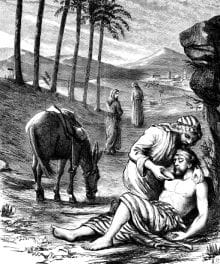
England’s former Prime Minister Margaret Thatcher once observed, “No one would remember the Good Samaritan if he’d only had good intentions – he had money too.” Of course the Good Samaritan was not an actual historical figure; he was a fictional man in a story that Jesus told to a religious legalist who was trying to justify his unwillingness to walk the walk. The story goes like this:
Here are 5 Lessons we can learn from the Good Samaritan Story

1. The good samaritan was willing to get involved.

We may quote scripture and recite platitudes on love and God, but unless we are willing to get involved in the lives of others, we are only blowing smoke. The Samaritan treated and bandaged the wounds. He set the injured man on his donkey. He took him to an inn and cared for him throughout the night. The Samaritan could have said to himself, “I give regularly to my church.  I donate to the Salvation Army every Christmas. I have done my part.” But he didn’t. As the scriptures say, he had compassion…and he acted on it.

2. The good samaritan ignored racism.

Even though he was considered a “despised Samaritan,” he rose above such shallowness to care for a fellow human being. I compare the Samaritan’s actions to an American 19th century slave showing compassion to a plantation owner or a Jewish prisoner demonstrating concern for a Nazi guard during WWII.

3. The good samaritan had money.

Margaret Thatcher was absolutely spot on: this was a man who managed his money. He undoubtedly lived on a budget, spent less than he made and maintained a contingency fund for unexpected expenses. My wife and I fully realize that we need to be very intentional if we are going to have such a giving fund, so we place cash into a “bless envelope” every month. Knowing that money is there has raised our antennae to the needs around us.

4. The good samaritan had a good name.

One wonders if the Samaritan had been to that inn before, perhaps paying for some other needy person’s stay. We know this:  the innkeeper trusted the Samaritan, probably because he had proven himself to be trustworthy.

5. The good samaritan was generous.

The Samaritan didn’t know how long the injured man would be laid up, but I am guessing (because the text said the attack left him “half dead”), that it could be a prolonged stay. At any rate, the wellbeing of this stranger was more important to our Good Samaritan than whatever the cost might be. Again, this generosity would never have been possible if he hadn’t had money in the first place.
The central message of this story is that, if we are to be good neighbors, we need to be more like the Samaritan. The implied message is to get strong financially and stay strong financially so we can have the means to act on our good intentions.
Jesus concludes with this admonition, “Go and do likewise.” When we learn this lesson, we, and the world around us, will be better for it.
How will you follow Jesus’ challenge to “Go and do likewise”? What additional lessons from the Good Samaritan can you think of? Leave your thoughts in the comments below!

Thursday, May 2, 2019

The Power of a Simple Prayer

20141103_Max

“Don’t worry about anything; instead, pray about everything; tell God your needs, and don’t forget to thank him for his answers.” Philippians 4:6 (TLB)
 Want to see a father’s face ashen or hear a mother gasp? Then sit nearby as they discover three words

on the box of a new toy: “Some assembly required.” What follows are several late night hours of

squeezing “A” into “B,” bolting “D” into “F,” and hoping no one notices if steps 4, 5 and 6 are skipped

altogether. Parents want a gift for their child. What they get is a project – sometimes a project for life.

“Some assembly required.” It’s not the most welcome sentence, but it’s an honest one. Marriage licenses should include those words, in large print. Job contracts should state them in bold letters. Babies should exit the womb with a toe tag: “Some assembly required.”
Life is a gift, albeit disassembled. It comes in pieces and sometimes falls to pieces. Part A doesn’t always fit Part B. The struggle seems large and inevitably, something is missing.
It’s such a common problem. Who among us doesn’t have an area of life that isn’t working? How do you respond when the pieces don’t fit? In frustration? In anger? In prayer?
I’d like to say I always respond in prayer. The truth? I am a recovering prayer wimp. I doze off when I pray. My thoughts zig, then zag, then zig again. If attention deficit disorder applies to prayer, then I am afflicted.
But I also know there’s power in prayer, even simple prayers. Mary, the mother of Jesus, knew this too.
Maybe you’ve heard the story. A couple thousand years ago there was a common wedding in Cana. The bride wasn’t the daughter of an emperor. The groom wasn’t a prince. Apart from one detail, the event would’ve been lost in time. But we remember it because Jesus was on the guest list.
While Jesus was there, the wedding party ran out of wine. Enter Mary, mother of Jesus. For my nickel, she appears too seldom in Scripture. After all, who knew Jesus better than she did? So, on the rare occasion she speaks, we perk up. “The mother of Jesus said to Him, ‘They have no wine'”(John 2:3b, NKJV).
Consider this prayer of Mary. The pieces didn’t fit, so she took the problem to Jesus. Mary wasn’t bossy. She didn’t say: “Jesus, they are out of wine. So, here is what I need. Go down to the grove at the corner. Accelerate the growth of some Bordeaux grapes. Turn them into wine.” She didn’t try to fix the problem.
Nor was she critical. “If only they had planned better, Jesus. People just don’t think ahead. What is society coming to?”
Nor did she blame Jesus. “What kind of Messiah are you? If you truly were in control, this never would have happened!”
She didn’t blame herself. “It’s all my fault, Jesus. Punish me. I failed as a friend. Now, the wedding is ruined. The marriage will collapse. I am to blame.”
None of this. Mary didn’t whine about the wine. She just stated the problem.
Then, “Jesus said to her, ‘Woman, what does your concern have to do with me? My hour has not yet come.’ His mother said to the servants, ‘Whatever he says to you, do it'” (John 2:4-5, NKJV).
Apparently Jesus had no intention of saving the wedding banquet. This wasn’t the time nor the place He had planned to reveal his power. But then Mary entered the story: Mary, someone He loved, with a genuine need.
So what did He do? Jesus told the servants to fill the water pots with water, and that water became wine the entire party enjoyed.
Problem presented. Prayer answered. Crisis avoided. All because Mary entrusted the problem to Jesus. Her simple request prompted a divine response!
Like me, you might think if you take your problems to Jesus every time you have one, you’ll talk to Jesus all day long. I think that’s the point. After all, the writer of Philippians reminds us in our key verse, “Don’t worry about anything; instead, pray about everything; tell God your needs, and don’t forget to thank him for his answers” (Philippians 4:6).
When life doesn’t fit, it’s easy to worry or be critical or try to fix it. But let’s let Mary be our model. She took her problem to Jesus and she left it there. She stated her problem simply, presented it faithfully and trusted Him humbly.

Wednesday, May 1, 2019

Obedience To God


Image result for picture verses on obedience


A Sermon
(No. 2195)
Delivered on Thursday Evening, August 21st, 1890, by
C. H. SPURGEON,  blueletterbible.org
At the Metropolitan Tabernacle, Newington

“By faith Abraham when he was called to go out into a place which he should after receive for an inheritance, obeyed; and he went out, not knowing whither he went.”- Hbr 11:8
THE part of the text to which I shall call your attention lies in these words, “By faith Abraham obeyed.” Obedience-what a blessing it would be if we were all trained to it by the Holy Spirit! How fully should we be restored if we were perfect in it! If all the world would obey the Lord, what a heaven on earth there would be! Perfect obedience to God would mean love among men, justice to all classes, and peace in every land. Our will brings envy, malice, war; but the Lord’s will would bring us love, joy, rest, bliss. Obedience-let us pray for it for ourselves and others!
“Is there a heart that will not bend
To thy divine control?
Descend, O sovereign love, descend,
And melt that stubborn soul! “
Surely, though we have had to mourn our disobedience with many tears and sighs, we now find joy in yielding ourselves as servants of the Lord: our deepest desire is to do the Lord’s will in all things. Oh, for obedience! It has been supposed by many ill-instructed people that the doctrine of justification by faith is opposed to the teaching of good works, or obedience. There is no truth in the supposition. We preach the obedience of faith. Faith is the fountain, the foundation, and the fosterer of obedience. Men obey not Cod till they believe him. We preach faith in order that men may be brought to obedience. To disbelieve is to disobey. One of the first signs of practical obedience is found in the obedience of the mind, the understanding, and the heart; and this is expressed in believing the teaching of Christ, trusting to his work, and resting in his salvation. Faith is the morning star of obedience. If we would work the work of God, we must believe on Jesus Christ whom he hath sent. Brethren, we do not give a secondary place to obedience, as some suppose. We look upon the obedience of the heart to the will of God as salvation. The attainment of perfect obedience would mean perfect salvation. We regard sanctification, or obedience, as the great design for which the Saviour died. He shed his blood that he might cleanse us from dead works, and purify unto himself a people zealous for good works. It is for this that we were chosen: we are “elect unto holiness.” We know nothing of election to continue in sin. It is for this that we have been called: we are “called to be saints.” Obedience is the grand object of the work of grace in the hearts of those who are chosen and called: they are to become obedient children, conformed to the image of the Elder Brother, with whom the Father is well pleased.